When the News Has to Tell Us, "This Is Real"
Two moments from the sports world made headlines this week for very different reasons.
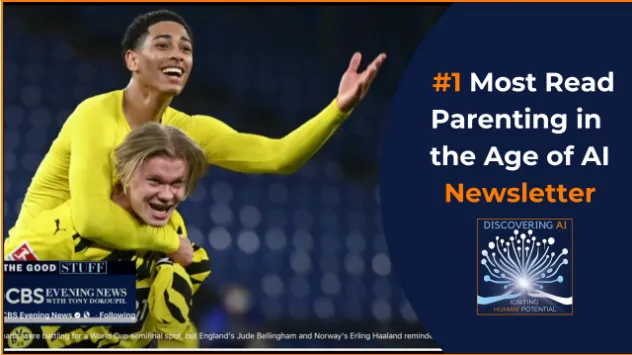
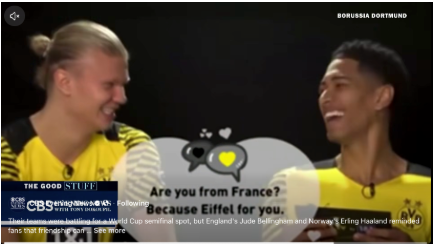
The first came out of the 2026 World Cup, after England eliminated Norway in extra time. Jude Bellingham scored both goals for England, and in the emotional aftermath, Norway's Erling Haaland, his former teammate and close friend, embraced him warmly. The two had played together years earlier in Germany, and fans quickly noticed how openly affectionate they were with each other even in defeat. In a tournament built on rivalry, a genuine and public friendship between opponents became one of the most shared stories of the week.
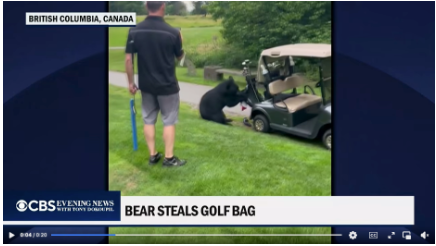
The second was stranger. At a golf course in Canada, a bear wandered onto the fairway, grabbed a golfer's bag of clubs, and dragged it away before eventually losing interest and letting play resume.
Both stories were real. Both actually happened.
When I saw the first segment, I knew it would end up in one of my talks. When the second one came out the same week, I knew this was the topic for our newsletter.
A national news anchor introducing them felt it necessary to tell viewers, up front, that the footage had been verified and was not AI-generated.
Sit with that for a second.
We have reached a point where a major news broadcast cannot simply show us something remarkable anymore. It has to reassure us first.
Yes, this really happened. No, this was not created with AI.
That is a real shift in how we process what we see, and it matters for every family raising kids in this moment.
Video Used to Feel Like Proof
Most of us grew up trusting our eyes and ears more than almost anything else. A photo could be staged. A quote could be exaggerated. Video and audio, though, felt like something closer to evidence.
That is no longer a safe assumption.
AI tools can now generate videos convincing enough to make it look like someone visited a place they never went, said words they never spoke, or did something they never did. And the tools to create this content are no longer limited to professionals with studios and budgets. They are available on ordinary phones and laptops, and they are getting easier to use every month.
So Many Videos Look Real When They Are Not
A recent investigative segment from InvestigateTV+ went behind the scenes with creators who build AI content for a living, some of them specifically to teach people how to spot it.
One creator regularly posts videos that challenge viewers to guess what is real and what is AI-generated. She showed how she starts with ordinary footage, pulls a still image from it, generates new AI imagery from that still, and layers the result over her original video. Using this process, she has made it look like she was riding a horse she never sat on, and replaced ordinary objects with things that were never there. Some of these videos have reached well over ten million views.
Another creator built a fake breaking news segment announcing that Canada had declared war on the United States, complete with a believable setting and a serious on-camera delivery. He later revealed the whole thing was AI-generated. He had made it as a demonstration for his own parents, so they could see firsthand how convincing this technology has become. His point was simple: this is not a future concern. It is already here.
The Visual Clues Will Not Save Us
Right now there is still common advice about spotting AI content by looking for odd hands, strange facial movement, misspelled signs, blurred edges, or backgrounds that do not quite make sense.
That advice still has some value today. It is also fading fast.
The technology is improving quickly enough that mistakes we can catch today may not exist in the next version of these tools. That means the most reliable detection tool available to us will not be our eyes. It will be our judgment: our willingness to slow down, ask questions, and look for confirmation outside the video itself.
We Need a New Habit
This does not mean living in suspicion of every video we encounter.It means retiring the habit of automatic belief.
When something surprises us, makes us angry, or confirms exactly what we already expected, that emotional reaction is often the signal to pause rather than share. A few honest questions can go a long way.
Who originally posted this? Is a credible news source reporting it? Can I find this confirmed somewhere else? Does the date and location line up? Is it labeled as AI-generated, satire, or entertainment? Why might someone want me to believe this, or want me to share it?
These questions are quickly becoming part of basic AI Literacy, not just for adults, but for kids too.
Even the Harmless Videos Matter
The same InvestigateTV+ report showed lighter examples too, including a viral clip of bunnies jumping on a trampoline that turned out to be AI-generated.
It is tempting to shrug that off. Cute bunnies, no real harm done.
The concern was never really about bunnies. It is about what happens when we get comfortable accepting fabricated content as real, over and over, without anyone flagging it. Every time that happens without question, it wears down our instinct to look for truth. We become quicker to believe, and quicker to share before we check.
The next convincing fake will not always be bunnies on a trampoline. It could be a natural disaster, a political figure, a school threat, or someone your child actually knows. It could be built to frighten people, damage a reputation, or spread false information fast.
That is exactly why the small, silly examples deserve our attention now. They are shaping habits before the stakes get higher.
Our Kids Will Not Just Watch This Content. They Will Create It.
AI puts real creative power in kids' hands. They can build scenes, voices, and stories that once required a full production crew and budget. That is genuinely exciting, and it comes with real responsibility.
This summer is a good time to talk with your kids about when AI-generated content should be labeled as such, why someone's face or voice should never be used without their permission, and where the line sits between creative storytelling and content designed to deceive. A fake emergency, a fabricated school threat, or an embarrassing altered video can cause real harm, even when the creator insists it was only a joke.
Before creating or sharing something, it is worth teaching kids to ask themselves a few quick questions: Can I create this? Should I create this? Could someone mistake this for reality? Could it hurt, frighten, embarrass, or mislead someone?
These are not just technology questions. They are values questions, and that makes them family questions.
It Starts With Critical Thinking
Inside the FAMILY AI GAME PLAN™ and STUDENT AI GAME PLAN™, the first of the 6 C.R.E.A.T.E. Traits we build with families is Critical Thinking and Problem-Solving.
In the Age of AI, critical thinking means separating evidence from emotion, checking the source before reacting, noticing the date and location, and resisting the pull to share something purely because it is surprising. Sometimes it means being comfortable saying, "I do not know if this is real yet."
That word, yet, does a lot of work. Kids do not need to decide instantly whether something is true. They can pause, investigate, look for confirmation, and decide once they actually have enough information. That is what discernment looks like now.
This Is Why Family Conversations Matter
Schools will keep building AI Literacy into the classroom. Technology companies will face growing pressure for better labeling standards. Newsrooms will keep working to verify what is real before it airs.
Families still hold something no institution can replace: the values conversation.
We get to decide, together, what our family considers honest, responsible, and appropriate to create or share. We can model pausing before we repost something. We can admit when we got fooled by something that turned out to be fake. We can show our kids that changing your mind once you have better evidence is not a weakness. It is maturity, and it is Critical Thinking in action.
This is the work of parenting in the Age of AI. Not having every answer. Building shared language before confusion becomes conflict.
With you on this journey,
Amy
***
This Week's MindSpark Family Activity
Next time your family comes across a remarkable video together this summer, whether it is a wild sports moment, a bear stealing golf clubs, or something that just feels a little too perfect to be true, pause and make it a conversation instead of a scroll-past.
Watch it together. Ask who posted it first and whether a trusted source has confirmed it. Talk about why you believe it, why you doubt it, or why you simply do not have enough information yet to decide either way.
In the Age of AI, seeing is no longer automatically believing. Seeing is where the thinking begins.
***
𝐃𝐢𝐬𝐜𝐨𝐯𝐞𝐫𝐢𝐧𝐠 𝐀𝐈: Igniting Human Potentialdiscoveringai.org|camps.discoveringai.org
Want to learn more? Follow💠 Amy Love 💠on LinkedIn or Facebookand subscribe to the DISCOVERING AI newsletter.
